
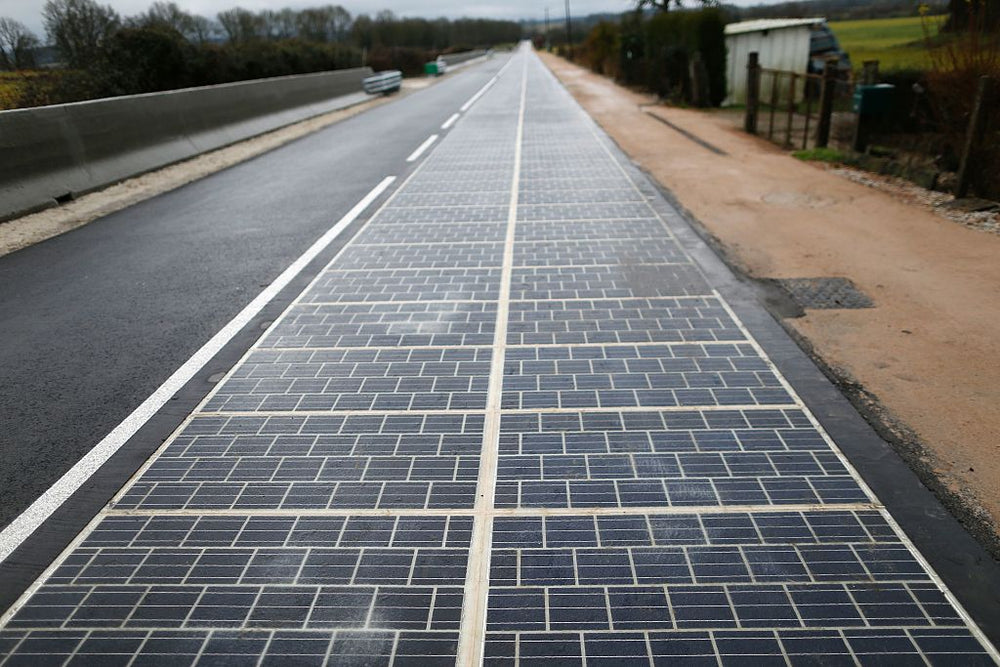
When we think of solar energy, the first thing that comes to mind is often rooftop installations or solar farms spread across fields. But what if I told you there is another, more unusual way to harness solar power? Imagine the roads we travel on every day absorbing sunlight and converting it into energy. It sounds futuristic, right? Well, this is actually a concept known as solar roads, and it is more than just a distant dream—companies are already working to make it a reality.
What are solar roads? Solar roads, as the name suggests, are roads paved with solar panels. These special solar panels are designed to be robust enough to withstand the weight of vehicles while also generating electricity from sunlight. Imagine driving on surfaces that actively collect solar energy, unlike traditional asphalt or concrete roads. This concept takes the idea of solar power and truly integrates it into our infrastructure.
This built-in heating system can greatly reduce winter traffic accidents and road maintenance costs. In areas prone to heavy snowfall, this is a game-changing technology.
Improved safety features: These solar panels are not only used for power generation but also equipped with LED lighting, which can replace traditional road markings. This means that road markings can be more clearly visible, especially at night or in bad weather, helping drivers to be safer on the road. In addition, sensors embedded in the panels can detect and transmit information about road hazards such as wild animals, fallen trees, or black ice. Then these real-time updates can be communicated to drivers or even smart vehicles, creating safer travel conditions. Durability and maintenance: You may wonder, ‘How can the glass surface withstand the weight of cars and trucks?’ The tempered glass used in these panels is very strong and can withstand the wear and tear of traffic. According to Solar Roadways, their panels have been tested for load-bearing and durability and have proven to be as strong as traditional asphalt in most cases. Moreover, if a panel is damaged, the road will not be ruined – individual panels can be easily replaced without removing the entire section, making maintenance more cost-effective. Environmental benefits: In addition to producing clean energy, solar roads can reduce carbon footprints in other ways. The system can help reduce the demand for asphalt production, which is an important source of pollution. Reducing maintenance projects such as repaving or snow removal also means reducing fuel consumption and emissions from heavy machinery. In addition, by producing energy locally, solar roads can reduce the demand for long-distance transmission lines, reducing energy losses and improving grid efficiency. Impact on the economy: The shift to solar roads may also create new economic opportunities. By investing in solar roads, governments and private entities can stimulate employment in the manufacturing and maintenance of these systems. In addition, areas adopting solar roads can reduce their dependence on external energy sources, achieving long-term cost savings. Solar roads bring together multiple cutting-edge technologies and are expected to make our roads not just passages for vehicles – they can become active participants in producing clean energy, improving safety, and reducing environmental impacts. However, although the benefits are obvious, there are still many significant obstacles to overcome before this concept becomes mainstream. We will explore these issues in the next section. What is the current status of solar roads? Although the idea of solar roads is exciting, it has proven to be challenging to turn this vision into reality.Solar Roadways, a company based in the United States, has made significant strides in advancing its technology, yet large-scale adoption remains in its early stages. The company has initiated multiple pilot projects to test the feasibility of its solar road panels under real-world conditions. One notable project is the installation of panels in a parking lot in Sandpoint, Idaho. This demonstration project allowed the company to showcase the potential of the technology not only to generate electricity but also to illuminate road markings and melt snow. However, the widespread application of solar road technology is still underway. One major obstacle is cost. Installing solar panels robust enough to withstand the weight of vehicles and endure continuous wear is much more expensive than traditional asphalt. Therefore, the company focuses on smaller-scale projects such as sidewalks and parking lots to further refine its technology before moving on to larger infrastructure projects. WattWay, France’s attempt at solar roads, comes from an initiative called WattWay, developed in collaboration between the large road construction company Colas and the French National Solar Institute (INES). WattWay has garnered significant attention for its ambitious goal of turning kilometers of roads into power-generating surfaces. In 2016, WattWay launched its first solar road in a small village in Normandy, covering approximately 1 kilometer of road with solar panels. The project aimed to assess whether solar roads are both practical and economical. Unfortunately, the results have been mixed. While the solar panels successfully generated electricity, the overall output was lower than expected due to lack of direct sunlight, shading from nearby trees, and general wear from vehicle traffic. Additionally, the project faced significant durability issues, with many solar panels cracking under the weight of heavy vehicles. China has also joined the solar highway movement, focusing on integrating solar panels directly into the roads. In 2017, China opened a solar highway in Jinan, the capital of Shandong Province, covering a 1-kilometer stretch of road with solar panels. This road is not only capable of generating electricity but also supplies power to streetlights, billboards, and even electric vehicle charging stations. What sets China’s solar highway apart is its unique approach, which differs from Solar Roadways or WattWay. Instead of placing solar panels on top of the road surface, China embeds the solar panels directly into the road, creating a smoother driving experience and protecting the solar panels from damage.
Although this concept has a bright future, this project also faces a series of challenges. Solar highways are highly cost-effective, yet the installation and maintenance costs remain extremely high. In addition, shortly after the road was opened, some solar panels were reportedly stolen, raising concerns about safety and long-term durability. Challenges faced by solar roads in real life Despite the success of pilot projects and early enthusiasm, solar roads still face several significant obstacles that hinder their widespread application. 1. High cost The cost of building a solar road is much higher than that of building a traditional asphalt road. According to estimates from projects such as Solar Roadways and WattWay, the cost of a solar road may be 20 times higher than that of a standard road surface. This includes not only installing solar panels but also the infrastructure required to connect the generated power to the grid. For many governments and municipalities, the high upfront cost makes large-scale solar road projects difficult to implement reasonably, especially when there are cheaper renewable energy options (such as rooftop solar panels or solar farms) available. 2. Durability and maintenance With heavy traffic and harsh weather on the road, both will wear down solar panels over time. The tempered glass used in solar panels is very strong but more easily damaged than traditional asphalt, especially under the heavy pressure of large trucks. In projects such as WattWay in France and Solar Roadways in the United States, early installations indicate that solar panels may be damaged or broken more frequently than expected. These damages will not only reduce the energy output of the panels but also increase maintenance and repair costs. Replacing or repairing a single panel is more complex and expensive than simply repaving a damaged asphalt section. 3. Energy efficiency Although solar roads can indeed generate electricity, their energy efficiency is usually lower than that of traditional solar panel installations. This is due to several factors. First, roads are often shaded by buildings, trees, or other structures, limiting the amount of direct sunlight they receive. Roads are also prone to accumulate dust, debris, and snow, which can block sunlight from reaching the solar panels and thus reduce their efficiency. In contrast, traditional solar farms are designed to optimize sunlight exposure and are regularly maintained to keep solar panels clean and maintain maximum efficiency. The lower energy output of solar roads makes it difficult to justify their high installation and maintenance costs.
4. Weather and Environmental Challenges
Solar panels may not generate the expected amount of electricity during frequent snow, rain, or cloudy weather conditions. Although some solar panels have built-in heating elements that can partially address snow and ice accumulation, these still block sunlight and reduce the electricity generation of the road. The efficiency of solar panels decreases under extreme high temperatures, which can be an issue in regions with high summer temperatures. Additionally, thermal expansion and contraction caused by temperature fluctuations can weaken the materials used in solar roads, leading to cracks or other forms of damage. 5. Safety and Vandalism As seen in China’s solar highway project, theft and vandalism pose a genuine threat to solar road infrastructure. The solar panels embedded in the road are valuable, and criminals may take advantage to steal and resell the technology. This not only causes economic losses but also disrupts the road’s energy production. 6. Public Acceptance and Regulatory Hurdles Introducing solar roads requires significant modifications to existing infrastructure, a concept not everyone agrees with. Governments and local authorities may be reluctant to invest in unproven technology, especially when the economic and environmental benefits are uncertain. Regulatory issues also need to be considered, such as how to integrate solar roads into the existing power grid and how to handle liability for road damage or accidents caused by solar panel failures. Drivers and the public may need time to adjust to the concept of driving on solar panels, especially when the road surface looks and feels different from traditional roads. Alternative Solutions: Standard Solar Systems While solar roads are an exciting and ambitious idea, the technology is still in its infancy and faces many challenges before large-scale implementation. However, the good news is that there are already cost-effective and efficient, proven methods of harnessing solar energy. Rooftop solar panels and solar farms are among the standard solar systems that have become effective practical methods for generating renewable energy. Why Standard Solar Systems are Effective Unlike solar roads, which still face high costs and durability issues, traditional solar panels have been refined over the past few decades. Here are the reasons why they remain the best choice for most people and businesses: Proven Efficiency: Standard solar panels are designed to capture sunlight in the most effective way, ensuring high efficiency. For example, rooftop solar systems can be tilted to maximize sunlight utilization, unlike solar roads that are obstructed by buildings, trees, and traffic. Cost-Effective: The cost of solar panels has dropped significantly in recent years, making the installation of solar systems more affordable than ever before.Investment Return on Investment (ROI) is much faster compared to experimental technologies like solar roads. Durability: Solar panels are designed for a long lifespan and require minimal maintenance, allowing them to be used for 25 to 30 years, thus being a stable long-term investment. This contrasts sharply with solar roads, which still face durability issues due to constant wear and tear from traffic. Flexibility: Traditional solar systems can be installed almost anywhere – on rooftops, in fields, or even as part of solar carports. This flexibility means you can adjust your solar setup according to your needs without waiting for the construction of new infrastructures like solar roads.
How SEL Can Help You Transition to Solar Energy If you are eager to reduce your carbon footprint and switch to clean renewable energy, there is no need to wait for technologies like solar roads to mature. Standard solar systems are already available, affordable, and efficient. At SEL, we offer custom solar solutions tailored to meet your specific needs, whether for homes, businesses, or larger-scale projects. We understand that each client is unique, which is why we provide free solar consultations to help you find the best solution. Whether you want to reduce energy costs, invest in green technology, or contribute to a sustainable future, we will guide you every step of the way. Get your free solar solution now and start enjoying the benefits of solar energy today. Solar roads may still be a vision for the future, but you don’t have to wait to reap the benefits of solar energy. Contact SEL to learn more about our efficient and reliable solar systems and take advantage of our free consultation to see how solar energy can serve you. By choosing mature solar technology now, you can start saving on energy costs and contribute to building a cleaner, more sustainable planet – without waiting!